iBEM Cultural – Connections Between Culture and Energy
Introduction
iBEM Cultural emerges as an initiative that seeks to investigate, value, and give visibility to the intersections between two fundamental pillars of contemporary society: culture and energy. More than simply coexisting, these realms intertwine—shaping territories, influencing ways of life, and pointing toward future pathways.
Culture is alive, dynamic, and constantly evolving. Likewise, the energy industry changes over time, driven by the need for adaptation and innovation. From the earliest uses of fire to the most advanced renewable generation technologies, humanity has developed increasingly conscious ways of using available natural resources.
Water, wind, sun, clay, straw—essential elements that sustain cultural practices and energy systems— reveal a deep connection between nature, traditional knowledge, and technological development.
At an event like iBEM2026, whose purpose is to strengthen cooperation and integration among different stakeholders in the energy sector, expanding the perspective to include the cultural dimension is not only relevant but necessary. After all, local cultures influence worldviews, guide decisions, and shape how energy is produced, distributed, and consumed.
In this first edition of iBEM Cultural, we have chosen craftsmanship as our starting point— a genuine expression of the relationship between human beings, territory, and natural resources. What emerges from the earth, just like energy.
We hope this marks the beginning of many encounters between culture and energy.
Recôncavo Baiano: From Clay to Energy
Ceramics of Maragogipinho
In the Recôncavo Baiano, culture and energy share a common origin: the region’s geological richness. From the same sedimentary basin emerge both the clay used in craftsmanship and the energy resources that have driven Brazil’s development.
The traditional ceramics of Maragogipinho (a district of Aratuípe), produced for centuries, are the result of this fertile land. Passed down from generation to generation, this artisanal practice preserves ancestral knowledge, cultural identities, and a deep relationship with nature.
It was also in this same region that oil exploration began in Brazil, marking a decisive chapter in the country’s energy history. The Recôncavo thus stands as a symbolic territory where two worlds coexist: the ancestry of artisanal production and the modernity of the energy industry.
If, on one hand, oil fueled economic development, on the other it revealed the environmental limits of models predominantly based on fossil fuels.
Today, this same territory points toward new paths. The energy transition calls for the construction of a more diversified, sustainable, and balanced energy matrix—one that considers not only economic aspects, but also environmental, social, and cultural dimensions.
In this context, the ceramics of Maragogipinho gain even greater relevance. More than a cultural expression, they represent a production model with low environmental impact, deeply connected to natural cycles.
The Recôncavo Baiano thus tells a continuous story: from clay to oil—and from oil to energy diversity.
A journey that connects past, present, and future, showing that development and conservation can—and must—move forward together.
Learn more on Instagram:
@maragogipinho.rotadobarro and @mulheresdobarromaragogipinho
Costa do Sauípe: Tradition, Nature, and Energy Flows
Piaçava Weaving
In the Costa do Sauípe region, craftsmanship also emerges as a direct expression of the relationship between community and environment. Piaçava weaving, a tradition associated with Indigenous peoples such as the Tupinambá, is produced from natural fibers extracted from the piaçava palm and licuri.
This artisanal process involves knowledge, time, and technique—a true dialogue between human hands and natural resources:
Process steps:
- Cooking the still immature leaves
- Opening the fibers after cooking
- Rolling into a “cocoon” shape
- Natural drying of the fibers
- Scoring the dried leaves
- Final weaving, which may retain its natural color or include variations
These are hands that extract, prepare, shape, and transform.
More than a product, the weaving represents a production system that respects the rhythms of nature and uses renewable resources consciously.
Costa do Sauípe lies within a privileged ecosystem, where sun, wind, and water are abundant—essential elements both for maintaining biodiversity and for generating clean energy. It is a territory with enormous potential for renewable sources such as solar and wind energy, which
In this context, piaçava craftsmanship directly reflects the principles of sustainability: responsible use of resources, appreciation of traditional knowledge, and reduced environmental impact.
Like renewable energy, it is based on natural cycles—endless, at least from a human perspective—and on nature’s capacity for regeneration.
Learn more on Instagram:
@apsa.porto and @apsa.sauipe
An Invitation
iBEM Cultural proposes an expansion of perspective.
More than discussing energy as a technical resource, it invites reflection on its connections with territory, identity, and culture.
In future editions, the proposal is to broaden this perspective by inviting companies and organizations to share the cultural expressions present in the communities where they operate: photographs, dances, songs, festivities, traditions, and stories that coexist with energy generation.
This is an open invitation.
If this initiative resonates with you, we would like to hear your ideas, perceptions, and contributions. Send us an email with the subject “iBEM Cultural” and take part in building this space.
Because, in the end, energy is also what moves people, stories, and traditions.
And culture is, in itself, a form of living energy.
Exhibited Pieces – iBEM Cultural
The iBEM Cultural exhibition presents a symbolic selection of artisanal production from the Recôncavo Baiano and Costa do Sauípe, highlighting how raw materials, territory, and traditional knowledge are transformed into cultural expression.
Each piece carries not only technique, but also history, identity, and a deep relationship with natural resources—the same ones that sustain energy systems.
1. Tulip of Maragogipinho
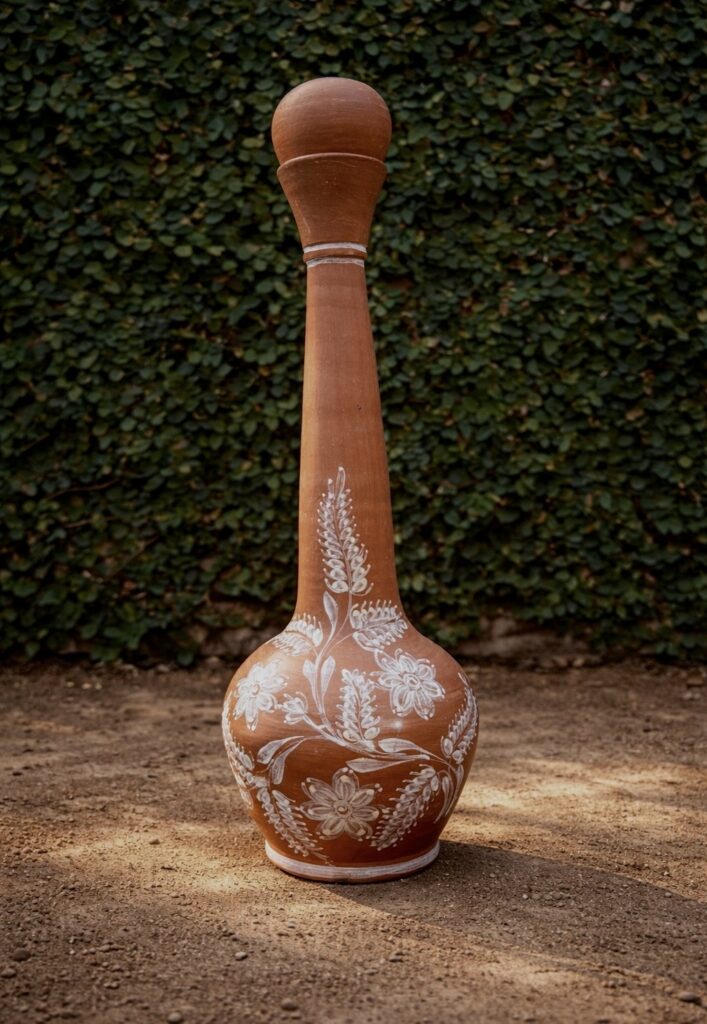
The Maragogipinho Tulip is one of the icons of local ceramics—an ornamental vase resembling the shape of a flower.
Produced in the district of Maragogipinho, in the municipality of Aratuípe, the piece represents over 300 years of ceramic tradition.
It synthesizes three fundamental dimensions:
- Ancestry: techniques passed down through generations of potters
- Innovation: contemporary reinterpretations in form and color
- Aesthetics: strong presence in decoration, combining rusticity and sophistication
More than a decorative object, the tulip symbolizes cultural continuity and the ability of a community deeply connected to the land to reinvent itself.
2. Boi Bilha
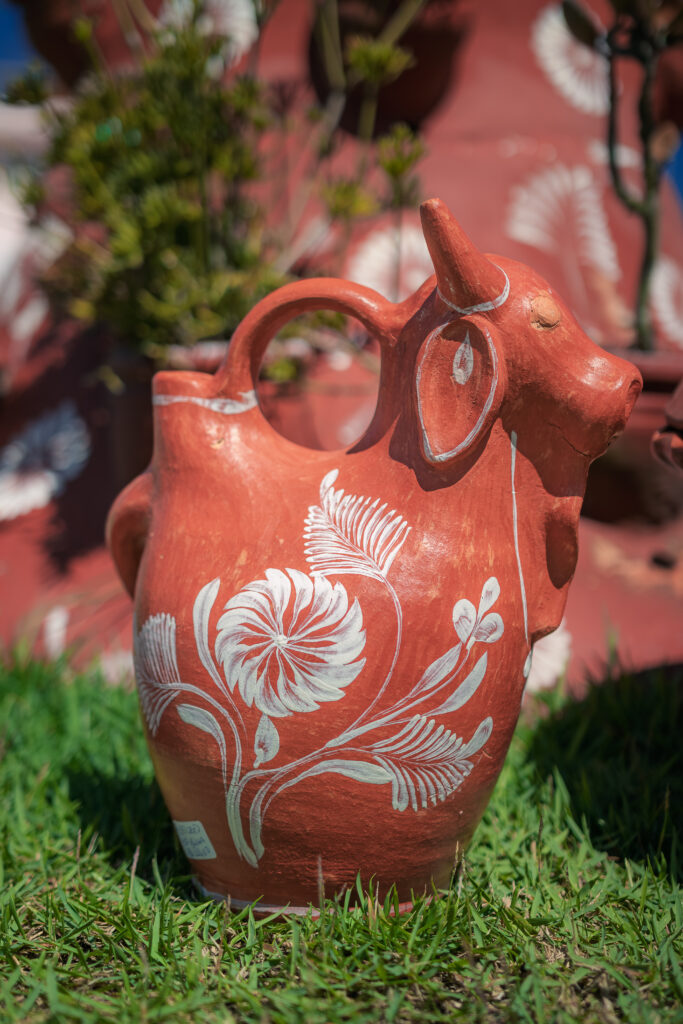
The Boi Bilha piece emerges from the meeting of tradition and innovation.
According to Taiane Moreira, granddaughter of Master Vitorino—the creator of the work—early commercialization of local ceramics was based on two references: pieces inspired by Master Vitalino (especially the ox) and the Portuguese water jug (bilha).
Driven by the desire to create something original, Master Vitorino developed a unique piece: a fusion between the ox and the jug.
The result is a work that combines symbolic form and functionality, becoming a landmark of Recôncavo Baiano ceramics.
The Boi Bilha incorporates traditional techniques such as the application of tauá (reddish natural pigment) and tabatinga (white clay), responsible for its characteristic colors and finishes. Tabatinga, in particular, gives the piece visual lightness and a subtle translucent effect.
Due to its originality and cultural relevance, Master Vitorino received important recognitions, including honors from UNESCO, reinforcing the piece’s value as Brazilian artistic heritage.
3. Baiana of Maragogipinho
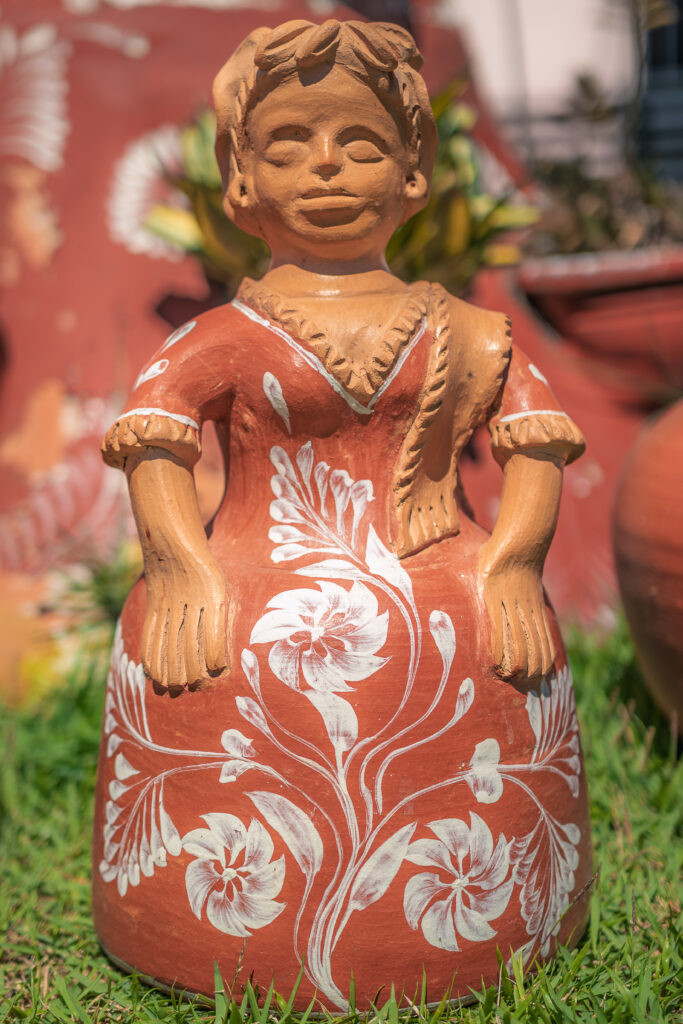
The Baiana of Maragogipinho is a sculpture that embodies identity.
Handcrafted, each piece is molded and painted by hand, preserving centuries-old techniques. The figure represents one of the greatest symbols of Northeastern Brazilian culture: the Baiana woman.
With her traditional clothing, vibrant colors, and rich details, the Baiana expresses joy, strength, and belonging. It is both art and memory—a link between past and present.
4. Piaçava Baskets
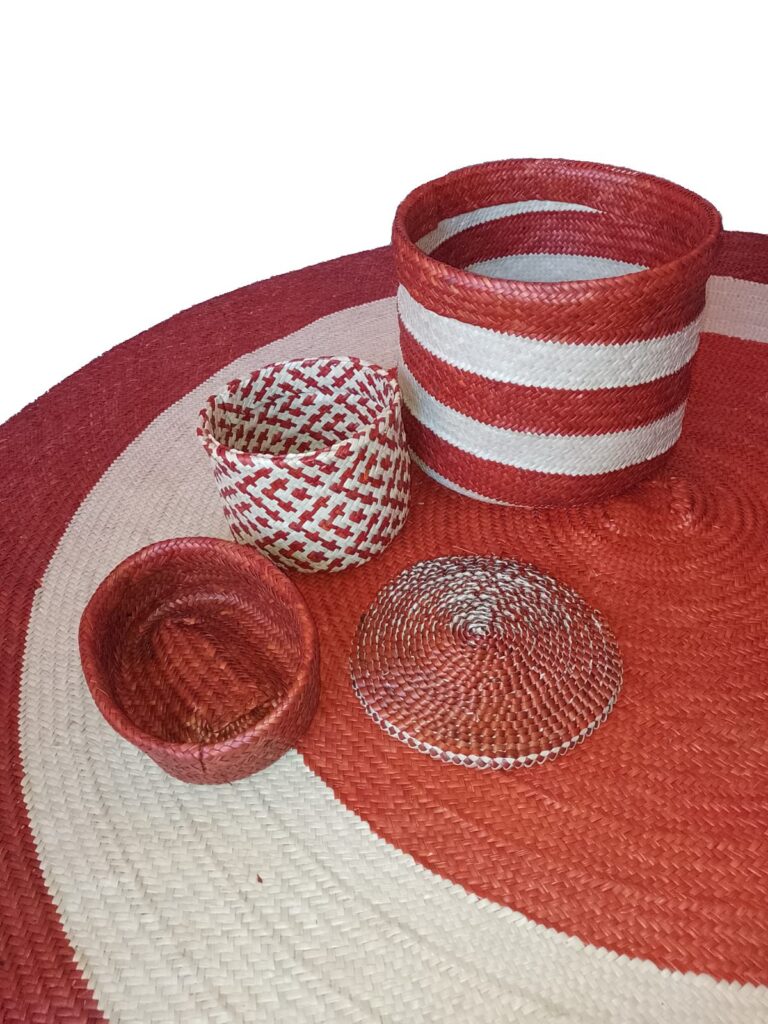
Piaçava baskets reveal the strength of craftsmanship rooted in Indigenous traditions, especially Tupinambá heritage.
Made from piaçava and licuri fibers, these objects result from a careful and rhythmic process:
- Cooking immature leaves
- Opening the fibers
- Rolling into a “cocoon” shape
- Natural drying
- Scoring the leaves
- Final weaving
These are hands that extract, transform, and build.
More than utilitarian objects, the baskets represent a sustainable production model based on the conscious use of renewable resources.
5. Ceramic Bio-Jewelry
Bio-jewelry brings together art, body, and territory.
Produced with handmade ceramics and natural pigments such as tauá and tabatinga, these pieces carry deep symbolism:
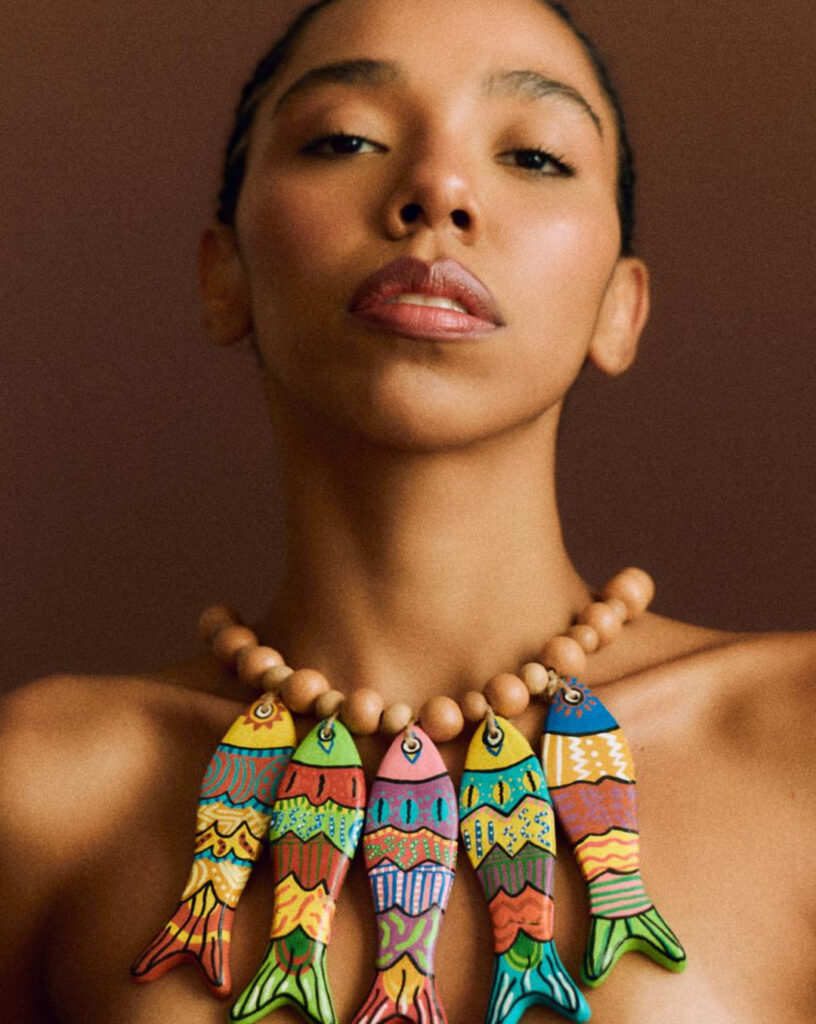
Five Fish Necklace
Evokes water abundance and riverside life
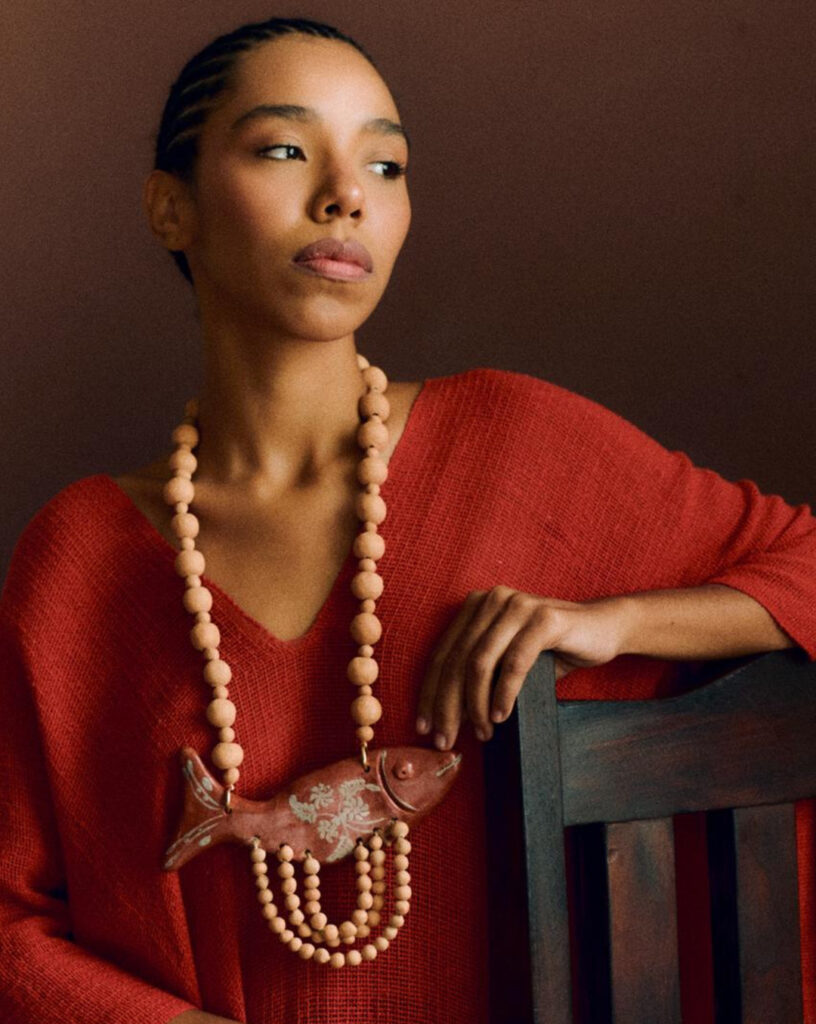
Floral Fish Necklac
Combines nature and aesthetic delicacy
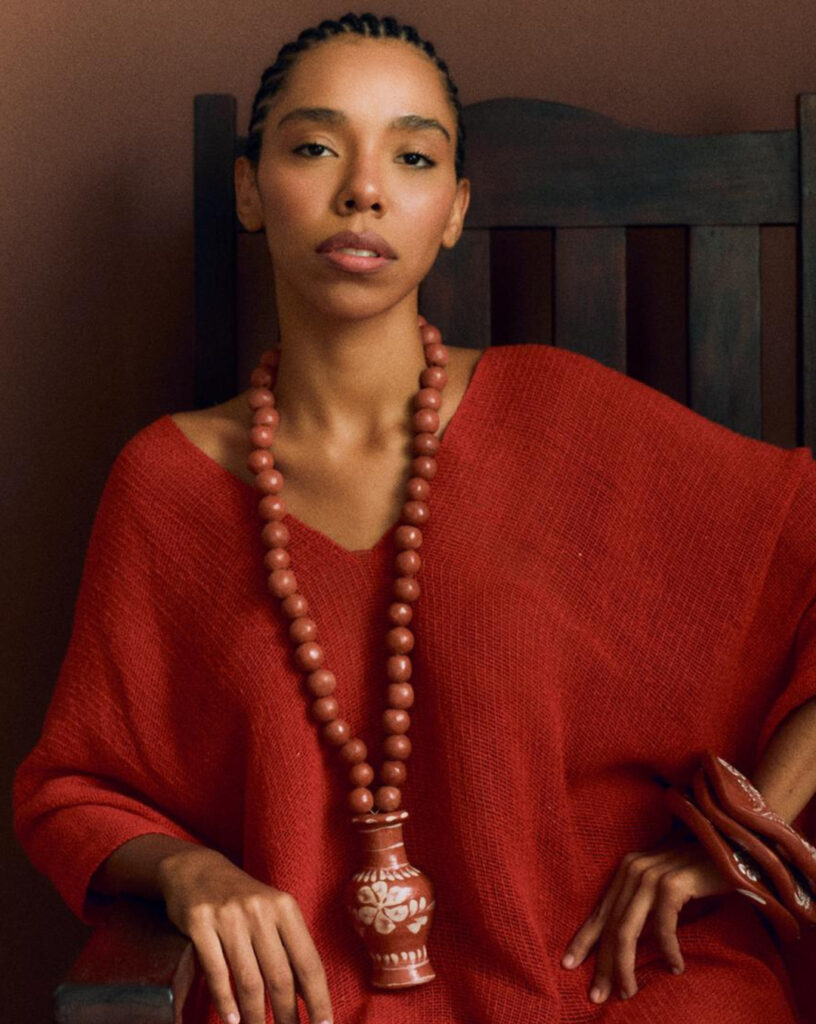
Moringa Necklace
inspired by traditional water vessels, referencing ancestral water storage practices prior to electrification
Here, clay becomes not just an object, but a language.
More information in the catalog: https://drive.google.com/file/d/14SmWYtLMkFE7AuOmcHLbYrhFiiTiEufO/view?usp=drivesdk
Or on Instagram:
@mulheresdobarromaragogipinho
6. Ceramic Bags
Pufferfish Ba
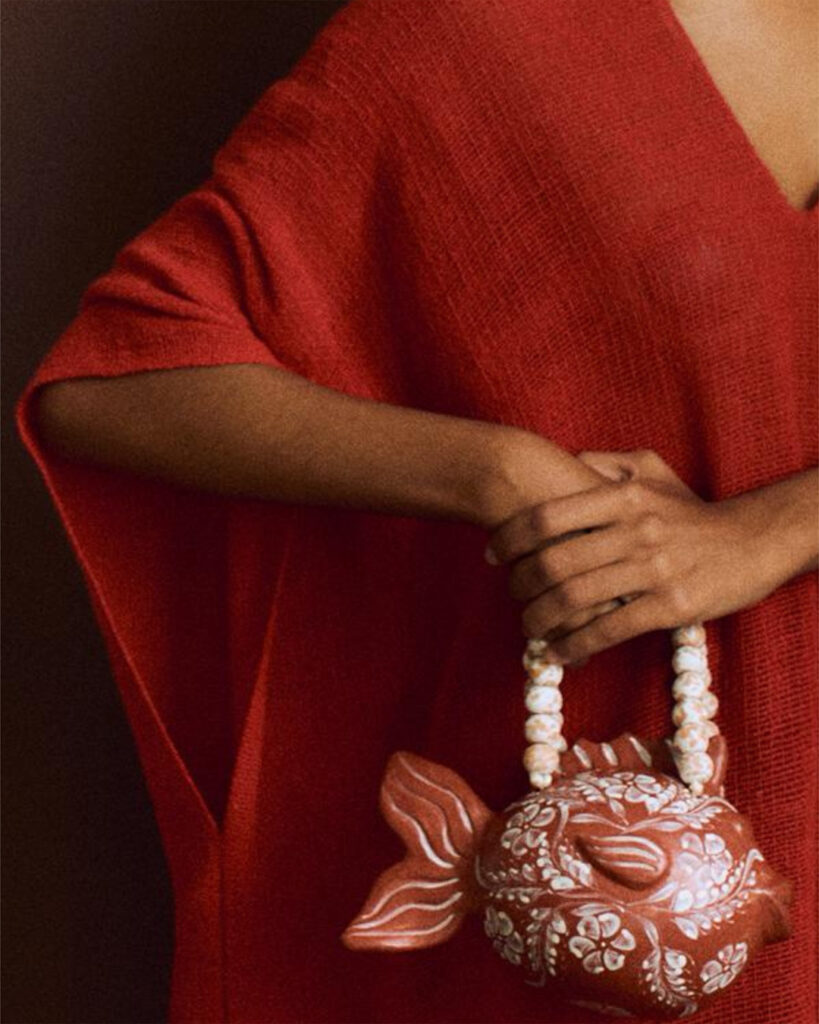
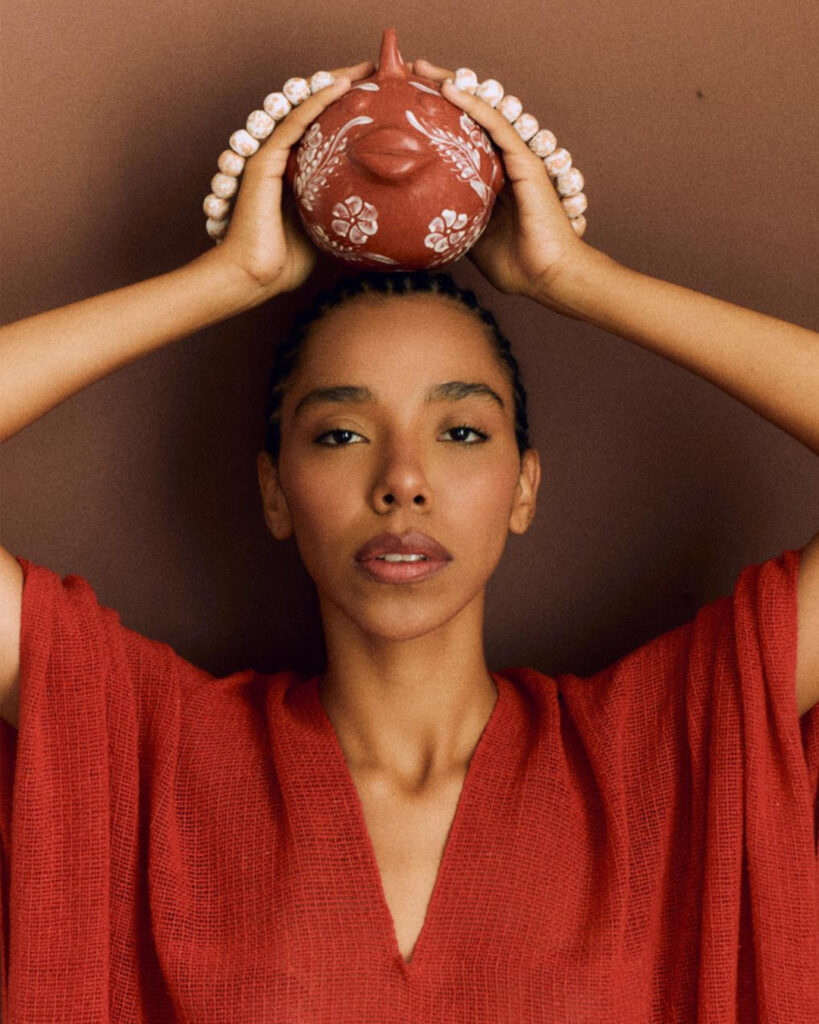
Inspired by the pufferfish and the Jaguaripe River, which bathes the district of Maragogipinho and flows into Todos os Santos Bay, this piece represents the connection between territory, biodiversity, and local culture. Its production combines wheel-throwing and hand-modeling techniques, with floral painting in tabatinga (organic slip).
Shell Bag
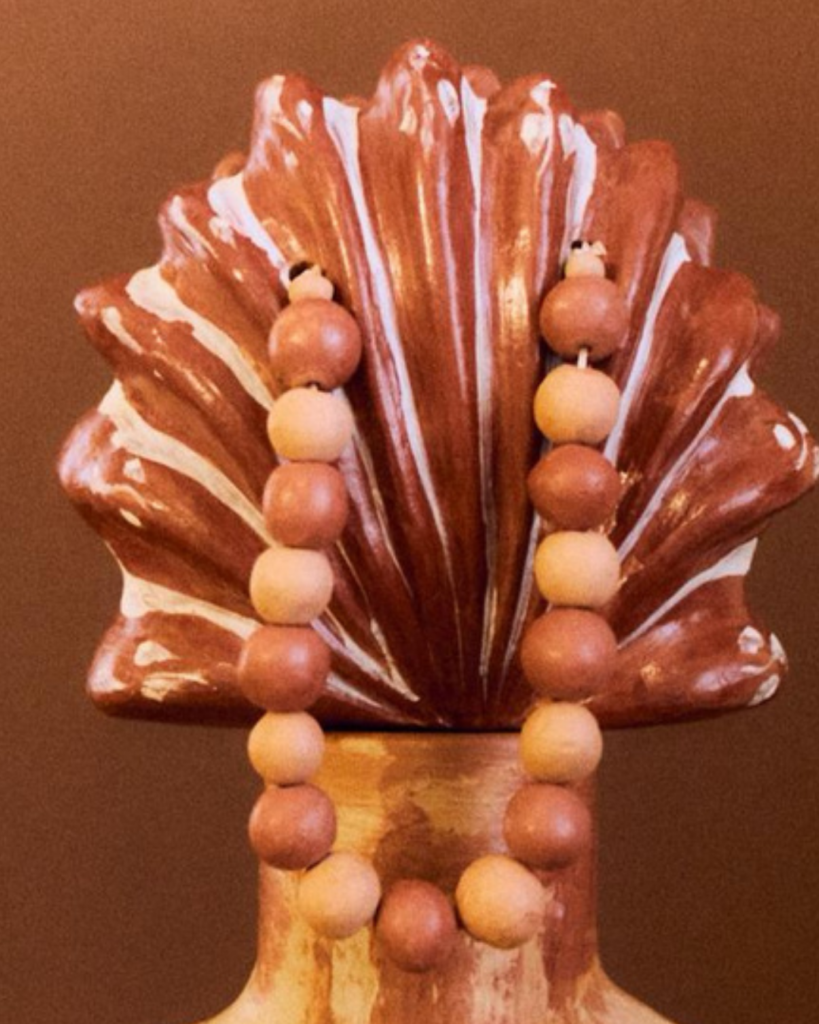
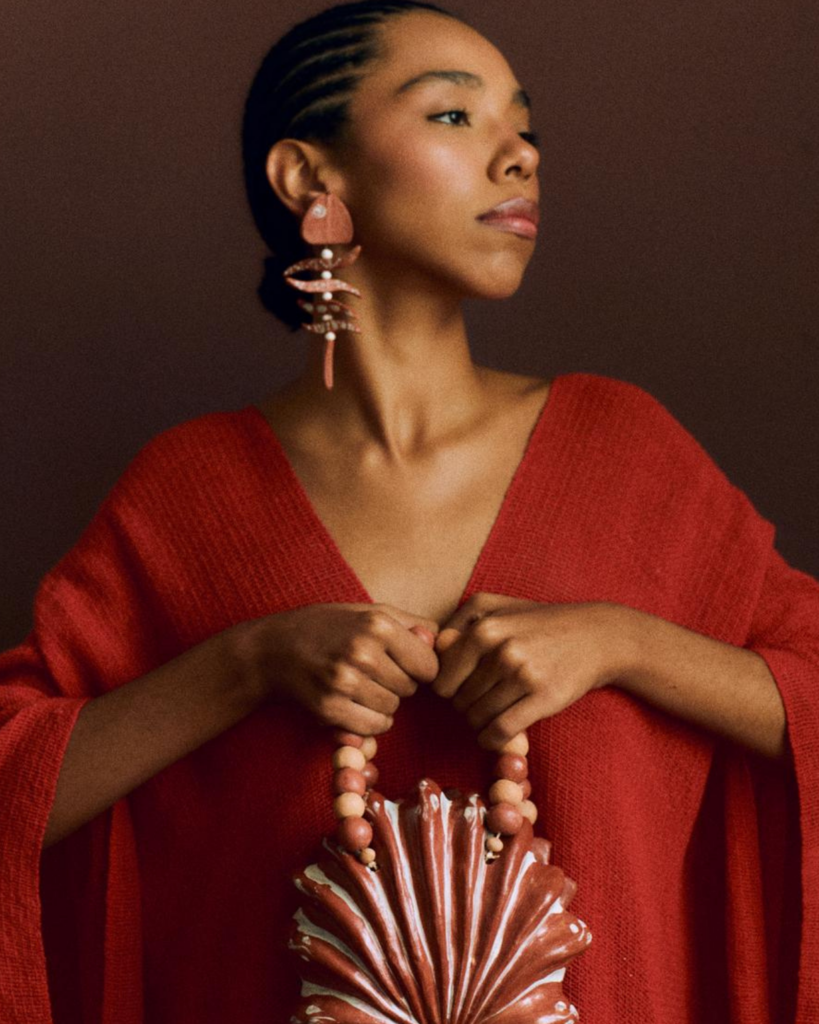
Evokes the sea and tides, symbolizing the intimate relationship between communities and the coastal environment. It expresses emotional memory and the identity of riverside communities.
More information in the catalog: https://drive.google.com/file/d/14SmWYtLMkFE7AuOmcHLbYrhFiiTiEufO/view?usp=drivesdk
Or on Instagram:
@mulheresdobarromaragogipinho
7. Piaçava Mandala and Sphere Necklace
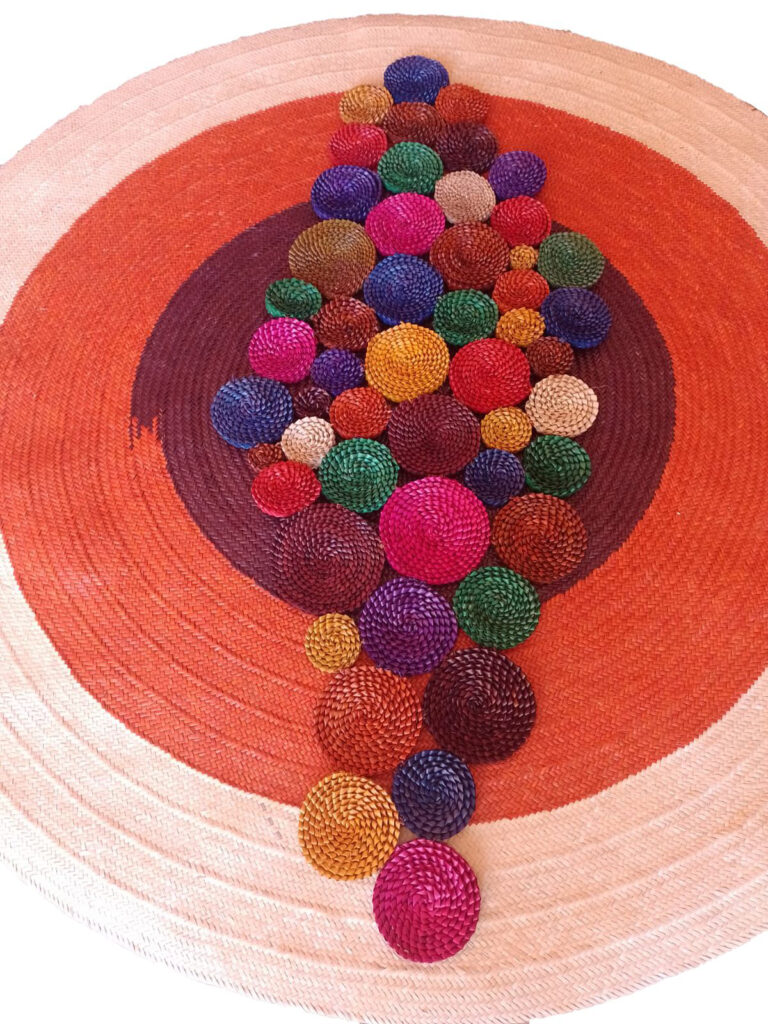
The piaçava mandala expresses harmony and circularity—concepts present both in nature and in energy systems.
Produced using traditional weaving techniques, it symbolizes cycles, continuity, and balance.
The ceramic sphere necklace complements this narrative, featuring bold volumes and tauá and tabatinga painting inspired by the landscapes and colors of the territory.
The Union of Cultures
The diversity of the pieces presented reveals something essential: there is no single way to produce, live, or transform resources—there are multiple cultures, multiple technologies, and multiple forms of knowledge.
By bringing together ceramics, natural fibers, and bio-jewelry, iBEM Cultural proposes a dialogue between different cultural expressions that share a common principle: the transformation of matter into meaning.
Just as in the energy sector, where different sources coexist—solar, wind, hydro—culture is also built on diversity.
Promoting this union means recognizing that innovation and tradition are not opposites, but complementary.
And that the future—of both energy and culture—depends on our ability to integrate knowledge, respect territories, and value the stories that have brought us here.